
Pharma Texture Analyzer & Method
Pharma Texture Analyzer
Accurate and Efficient Pharma Texture Analysis for Pharmaceutical Product
About Us
Introduction to Pharma Texture Analysis
Pharma texture analyzer instruments are vital for pharmaceutical quality control, ensuring tablets, capsules, and gels meet mechanical and performance standards. Cell Instruments provides advanced solutions for laboratories to evaluate hardness, gel strength, tensile properties, and compression behavior with high precision.
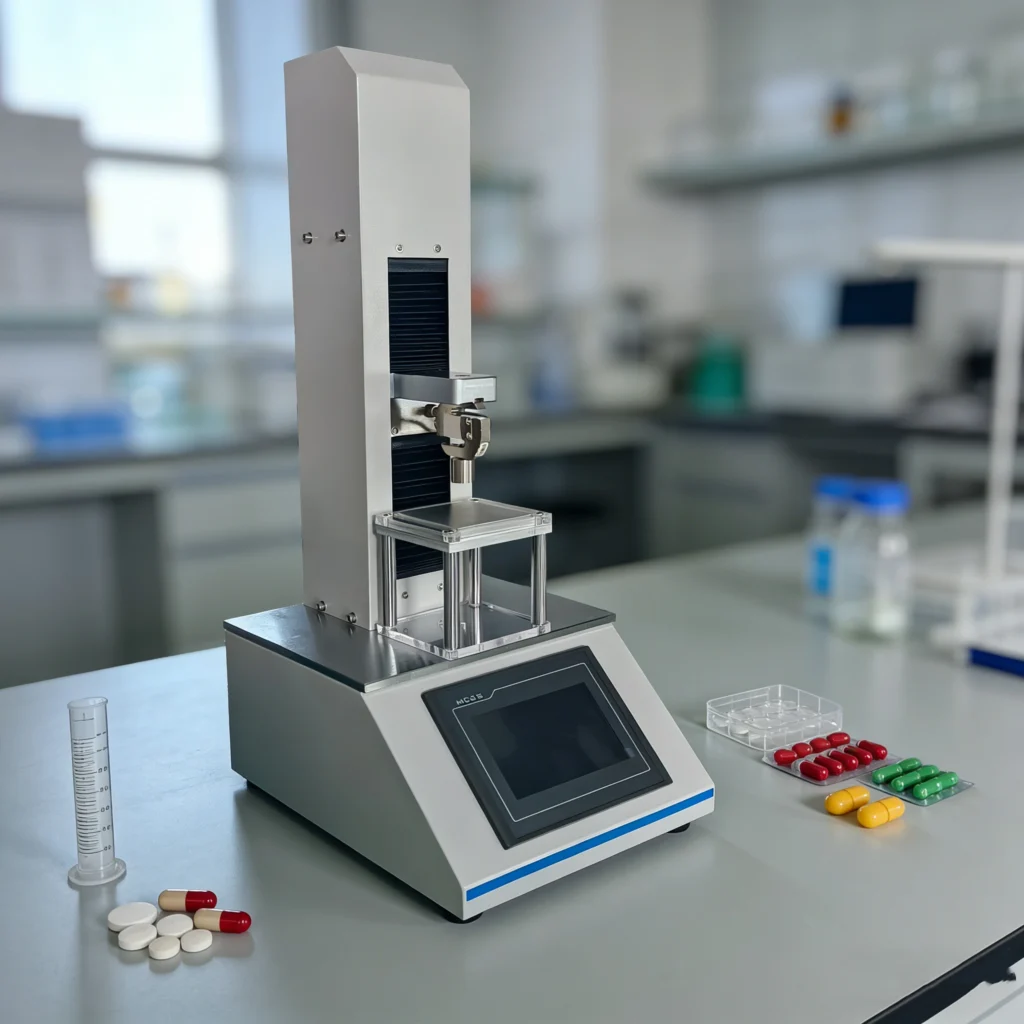
Comprehensive Pharma Texture Analysis
Pharmaceutical products require rigorous testing to ensure safety, stability, and efficacy. Our pharma texture analyzers support a range of dosage forms including:
- Tablets: Evaluating breakage resistance and mechanical strength.
- Capsules: Measuring capsule wall integrity and deformation behavior.
- Soft Gels and Hydrogels: Assessing firmness, elasticity, and gel stability.
These analyzers allow repeatable and accurate measurements, enabling researchers and QC personnel to maintain high-quality standards.
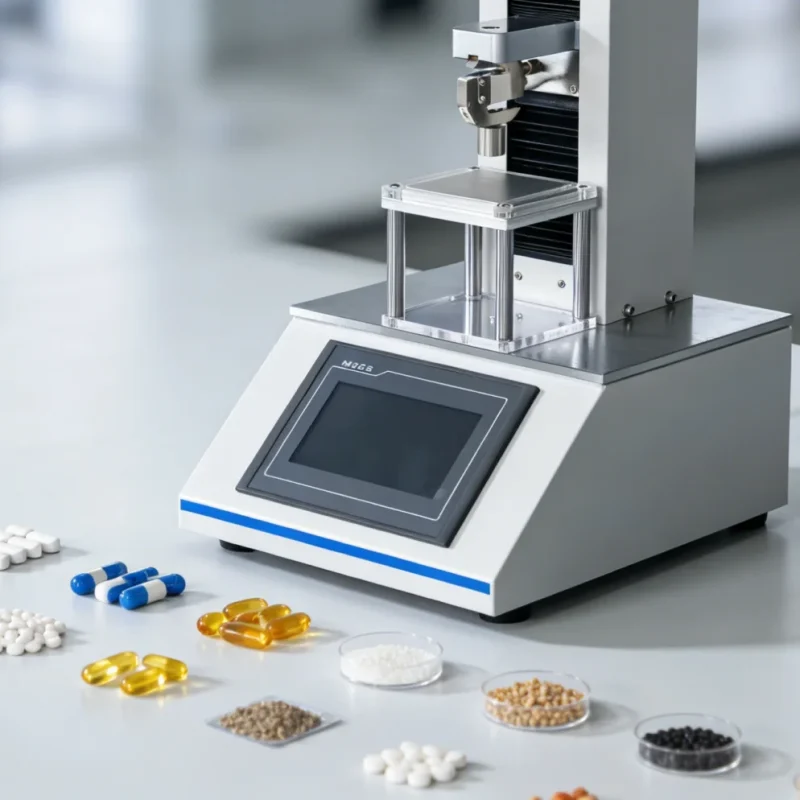
Main Functions and Advantages of the Pharma Texture Analyzer
Cell Instruments’ pharma texture analyzers deliver comprehensive testing solutions:
- Adjustable test range and speed for diverse sample types
- Stroke length suitable for tablets, capsules, and gels
- Multiple compression modes including single compression, cycle compression, fixed deformation, and hold-to-load
- Optional TPA (Texture Profile Analysis) simulating multi-bite analysis for Pro models
- Compact and robust design for consistent lab operations
Key Advantages
Precision
High-resolution measurement ensures consistent results.
Versatility
Handles tablets, capsules, and gel dosage forms.
Compliance
Meets international pharmaceutical testing standards.
Efficiency
Automation reduces operator error and speeds up testing.
Cylinder Probe Texture Analyzer for Pharmaceuticals
The cylinder probe texture analyzer is designed to measure mechanical properties in a controlled, reproducible way. Its key capabilities include:
01
Firmness and Hardness Testing
Quantifies resistance to deformation for tablets and capsules.
02
Compression and Fixed Load Analysis
Evaluates how products respond to sustained pressure.
03
Tensile Testing
Measures stretch and rupture forces for capsules and soft gels.
This instrument combines precision engineering and intuitive operation, making it ideal for both research and routine quality control.
Optimizing Pharma Texture for Various Dosage Forms
Different dosage forms require tailored testing approaches:
- Tablets: Hardness and friability tests prevent breakage during packaging and transport.
- Capsules: Texture and tensile analysis ensures wall integrity and consistent drug delivery.
- Soft Gels / Hydrogels: Gel strength and elasticity tests confirm quality and consistency.
Customizing test parameters improves product reliability and ensures compliance with quality regulations.
Pharma Texture Analyzer
Technical Specifications
n pharmaceutical quality control, precise measurement of tablet hardness, capsule texture, and gel strength is critical. Cell Instruments provides two specialized texture analyzers, TEX-01 and TEX-02, tailored for different testing needs. The table below highlights their capabilities:

| Feature | TEX-01 | TEX-02 |
|---|---|---|
| Applicable Fixtures | All standard fixtures | All standard fixtures |
| Tablet Hardness & Compression Test | ✅ | ✅ |
| Capsule Texture / Gel Strength Test | ✅ | ✅ |
| Hold / Fixed Load / Fixed Deformation | ✅ | ✅ |
| Tensile Test | ✅ | ✅ |
| Bloom Test / Gel Firmness | ✅ | ✅ |
| Texture Profile Analysis (TPA / Two-Bite Test) | ✅ (Pro version required) | ❌ |
| Test Range & Speed | 50 kg, 1–500 mm/min | 20 kg, 1–500 mm/min |
| Stroke | 250 mm | 110 mm |
| Dimensions (L×W×H) | 410×360×820 mm | 450×300×360 mm |
| Power | AC 110–220 V | AC 110–220 V |
| Compliance | Meets pharmaceutical testing standards | Meets pharmaceutical testing standards |
Applicable Fields and Typical Applications
Why Choose Cell Instruments?
Cell Instruments stands out as a trusted partner in pharmaceutical texture testing due to its decades of industry expertise and commitment to precision. Our advantages include:
- Proven Quality: Our pharma texture analyzers are engineered to deliver highly repeatable and accurate results, ensuring consistency across tablets, capsules, and gels.
- Customization Services: We tailor solutions for specific dosage forms and testing requirements, including automation and specialized fixtures.
- Comprehensive Support: From pre-sale consultation to operator training and responsive after-sales service, we help clients maximize productivity.
- Regulatory Compliance: All instruments meet international pharmaceutical standards, giving confidence in both R&D and quality control processes.
- User-Friendly Design: Compact, intuitive, and reliable instruments simplify complex testing while reducing operator error.
Why Pharma Texture Testing Is Essential
Mechanical property testing is critical for pharmaceutical safety and performance. Without reliable texture measurements:
- Tablets may break, affecting dosage accuracy.
- Capsules could rupture or deform, compromising drug delivery.
- Gels may vary in firmness, reducing product stability and consumer trust.
By implementing robust texture analysis, manufacturers ensure product integrity, regulatory compliance, and patient safety.
Frequently Asked Questions about Pharma Texture Analysis
What dosage forms can be tested?
Tablets, hard and soft capsules, and semi-solid gels
How does texture analysis improve pharmaceutical quality?
It ensures consistent hardness, gel strength, and firmness, which are critical for efficacy and stability.
Can the analyzer support R&D as well as QC?
Yes, it is suitable for both development testing and routine quality control.
How does texture analysis improve patient safety?
By quantifying mechanical properties such as hardness, brittleness, and elasticity, pharmaceutical texture analysis ensures that tablets and capsules maintain integrity during handling, packaging, and consumption, reducing dosage inconsistencies and ensuring therapeutic efficacy.